
Is This Even Real?
On February 8, 2024, the Federal Government officially launched the Renewed Hope Cities & Estates Programme in Abuja. The goal of the initiative is to address Nigeria’s persistent housing shortage, especially in urban areas where there is a wide gap between demand and supply.
The state of housing in Nigeria has become very alarming, pointing to a spike in demand that is caused by population growth, rural to urban migration, rapid urbanisation, etc. Every Nigerian can relate to what housing prices are saying now. What about house agents who collect ‘inspection fees’ upfront, then parade people around dusty, overpriced or even unbelievable houses that look nothing like what was advertised in the pictures? By the time a person finds any house that will do, they have agency fees, agreement fees, caution fees, and a dozen other charges to deal with.
As a matter of fact, the Federal Ministry of Housing and Urban Development notes that there are 15.2 million housing units which fall below standards of safety, habitability, access to basic services, infrastructure, and durability.
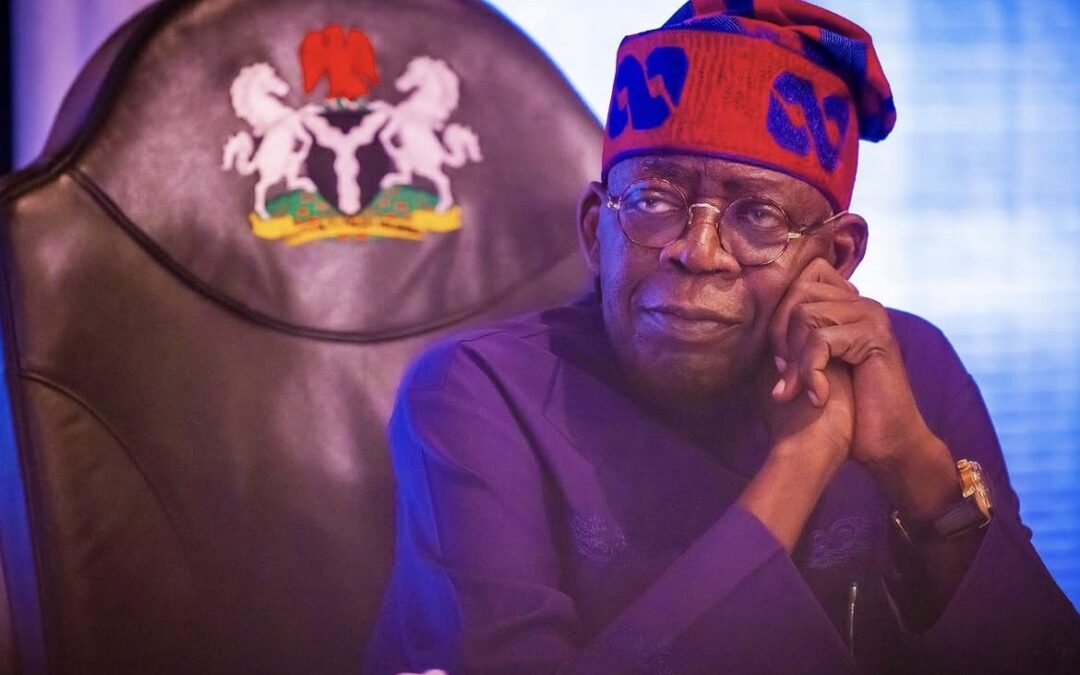
In clear terms, His Excellency, President Bola Tinubu promised to “make decent homes affordable again, and that a hardworking family, after years of paying rent, would finally have a path to a house of its own.” Interestingly, the Renewed Hope housing initiative is geared towards providing 100,000 homes nationwide. Will this even scratch the surface of bridging the demand-supply gap?
It is important to note that the government is currently implementing Phase One of the project, comprising 50,000 units distributed across the six geopolitical zones and the FCT. In terms of how the project is being funded, ₦ 126.5 billion has been allocated from the 2023 supplementary and ₦18.9 billion from the 2024 budget, with support from the Federal Mortgage Bank of Nigeria (FMBN), and strategic Public-Private Partnerships (PPP).
As it stands, construction is near completion in states like Abuja (3,112 units developed by Continental Civil and General Construction Ltd/Ceezali Consortia), Ibeju-Lekki, Lagos (2,500 units) and Kano (2,000 units developed by Messrs. Cosgrove Investment Limited, Vibe Bottega Ltd, and Frasier Stone Ltd.) while construction is under way in several other states. For instance, Nasarawa’s 250-unit estate is under construction, and Enugu has 2,000 units in the pipeline.
The blueprint of this program shows that Nigerians both home and abroad can benefit from this scheme. Priority is however given to people with low and middle-income earning capacities e.g. civil servants, traders, artisans, commercial drivers etc.
To be eligible for this program, every individual must:
- be above 18 years;
- have a verifiable means of income or employment;
- contribute to the National Housing Fund (NHF);
- comply with the terms and conditions of sale; and
- complete online applications with a valid means of identification (e.g. voter’s card, and
- NIN printout, valid international passport, or a driver’s license.
To access the programme, applicants have to go through an online portal where they can apply for different mortgage plans. In other words, applications are purely online which makes the process easier and seamless.
Here is a breakdown of prices under the Renewed Hope Housing Initiative:
- One-bedroom semi-detached bungalow: ₦8.5 million
- Two-bedroom semi-detached bungalow: ₦11.5 million
- Three-bedroom semi-detached bungalow: ₦12.5 million
The above prices are set to be uniform nationwide. There are also options for outright purchase, installment payments, NHF Mortgage, FMBN Non-interest Rent-to-Own, and Commercial Mortgage. (For more information, see: Renewed Hope)
While it is commendable that the scheme aims for fairness and equal opportunity, the average Nigerian would love to see this programme reduce the housing deficit and enjoy the actual benefits of their government’s promise in real time.