
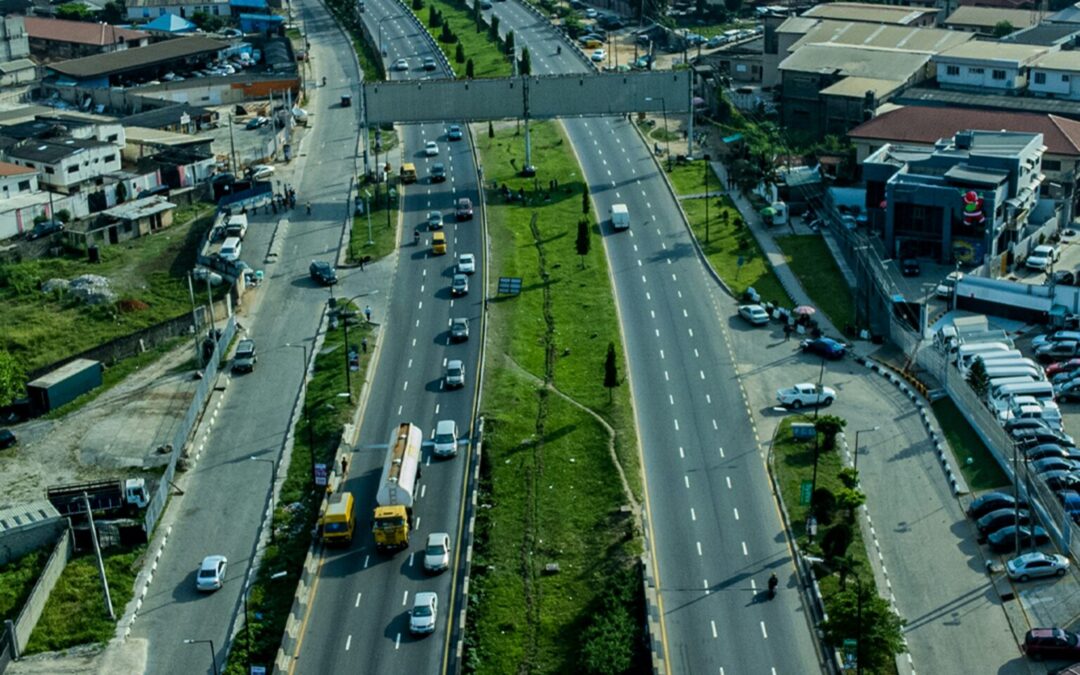
Nigeria’s drive to improve infrastructure has taken a new turn with the approval of a $516 million external loan for the Sokoto–Badagry Superhighway project.
On 28 April 2026, the House of Representatives approved the Federal Government’s request for the loan to fund the first phase of the 1,000-kilometre highway linking Sokoto State to Lagos through several states. Backed by President Bola Tinubu’s administration, the project is aimed at improving national connectivity and boosting economic activity along the North–South corridor.
Background
The project was first proposed in the 1980s under former President Shehu Shagari, the project was later abandoned for decades due to funding and policy challenges. Its revival shows renewed infrastructure ambition but also exposes a recurring issue in Nigeria: major projects often stop or delay when governments change.
These delays are costly. Repeated abandonment has likely increased project expenses due to inflation (general rise in prices), currency value loss, and rising construction costs. It also raises an important question: are big government projects planned properly from start to finish, with a clear roadmap to complete them?
The loan request, contained in a letter dated 23 April 2026 by President Bola Ahmed Tinubu, is being arranged through Deutsche Bank AG. It covers about 120 kilometres in the first phase, with a nine-year repayment period, a three-year grace period (a period where repayment does not start immediately), and an interest rate linked to the Secured Overnight Financing Rate (SOFR) plus 5.3%. SOFR is a global benchmark interest rate used in international lending.
The Federal Government will also provide over ₦265 billion as its own share of funding for related project costs such as land, compensation, and support works.
While presented as infrastructure financing, the scale of borrowing adds to Nigeria’s rising debt burden and raises concerns about long-term financial stability and project efficiency.
Current Progress
The highway is designed as a six-lane road with modern features such as solar-powered lighting, CCTV cameras, bridges, railway links, health posts, and security facilities. According to the Federal Controller of Works in Sokoto State, Mr. Kassimu Maigwandu, construction is ongoing in phases across Sokoto and Kebbi corridors.
Minister of Works, David Umahi noted that some sections are progressing ahead of schedule, stating that “percentage completion is 0.15%, while time elapsed is 0.049%,” and praised the contractors for starting work even without advance payment (upfront government payment).
Nigeria’s Rising Debt Profile
Concerns about Nigeria’s debt continue to grow. According to the Debt Management Office, public debt rose to about ₦159.28 trillion as of December 2025, while debt repayment (debt servicing) reached nearly ₦16 trillion in the same year.
Critics, including former Vice President Atiku Abubakar, argue that Nigeria’s increasing reliance on foreign loans for infrastructure requires stronger repayment planning and stricter financial discipline to avoid putting more pressure on public finances.
Economic Landscape
Nigeria continues to face high inflation, weak infrastructure, and low living standards. Poor transport systems, high transportation costs, and weak market connections reduce productivity and increase the cost of living for citizens.
While infrastructure spending is necessary, continued borrowing without clear repayment and income-generating plans risks increasing financial pressure and passing today’s debt to future generations.
This also raises concerns. When a large share of government income already goes into debt repayment, lawmakers are expected to carefully review borrowing decisions rather than approve them automatically. The Senate is expected to check government borrowing through transparency, proper evaluation, and accountability not just approval.
This raises important questions: shouldn’t the Senate act as a stronger check on borrowing decisions, and should large loans undergo stricter review and transparency checks?
There are also concerns about unclear loan details, weak cost analysis (whether the project is worth the money), poor public disclosure of contract awards, and unclear contractor selection processes.
More importantly, what is the real purpose of this borrowing; pure infrastructure development, or a politically timed decision ahead of the 2027 elections?
Politics, Elections and Infrastructure
This project highlights recurring issues in Nigeria’s infrastructure system. Since the proposal of the project in 1980, it has suffered repeated delays, which have increased costs due to inflation and economic changes. This shows a wider pattern where projects struggle to survive changes in government.
The timing of approval also raises questions.
If the loan was approved in April 2026, was there already a full implementation plan in place? And if the cost was already known, why was a full project plan not prepared before taking more loans?
There are also transparency concerns. Who are the contractors, and were they selected through open and fair bidding? Without clear information, concerns about secrecy and political influence remain.
As the 2027 elections approach, there is concern that such projects may be used to show performance and gain political support. During election periods, governments often revive or announce big projects, raising questions about whether the goal is real development or political advantage. There is also a risk that projects may be abandoned if future governments do not continue them.
For readers who want to better understand how to critically evaluate government projects, the InfraSpotlight Citizens’ Guide provides a simple way to assess infrastructure decisions and hold public institutions accountable.
Future Outlook
The project is expected to continue in phases, but no clear completion timeline has been publicly shared. This means delivery depends on steady funding, good coordination, and continuity between governments.
While it could develop into a major trade and transport corridor, Nigeria’s history of unfinished infrastructure projects raises concerns about whether it will be completed or abandoned in the future.
Conclusion
The project shows Nigeria’s continued push for large infrastructure development aimed at improving connectivity and economic growth. However, it also highlights concerns about rising debt, transparency, and long-term planning.
It shows the need for stronger financial discipline and consistent policies in infrastructure development.
The key question remains; Can Nigeria grow its infrastructure while still managing its economy responsibly, especially with rising debt pressures?